
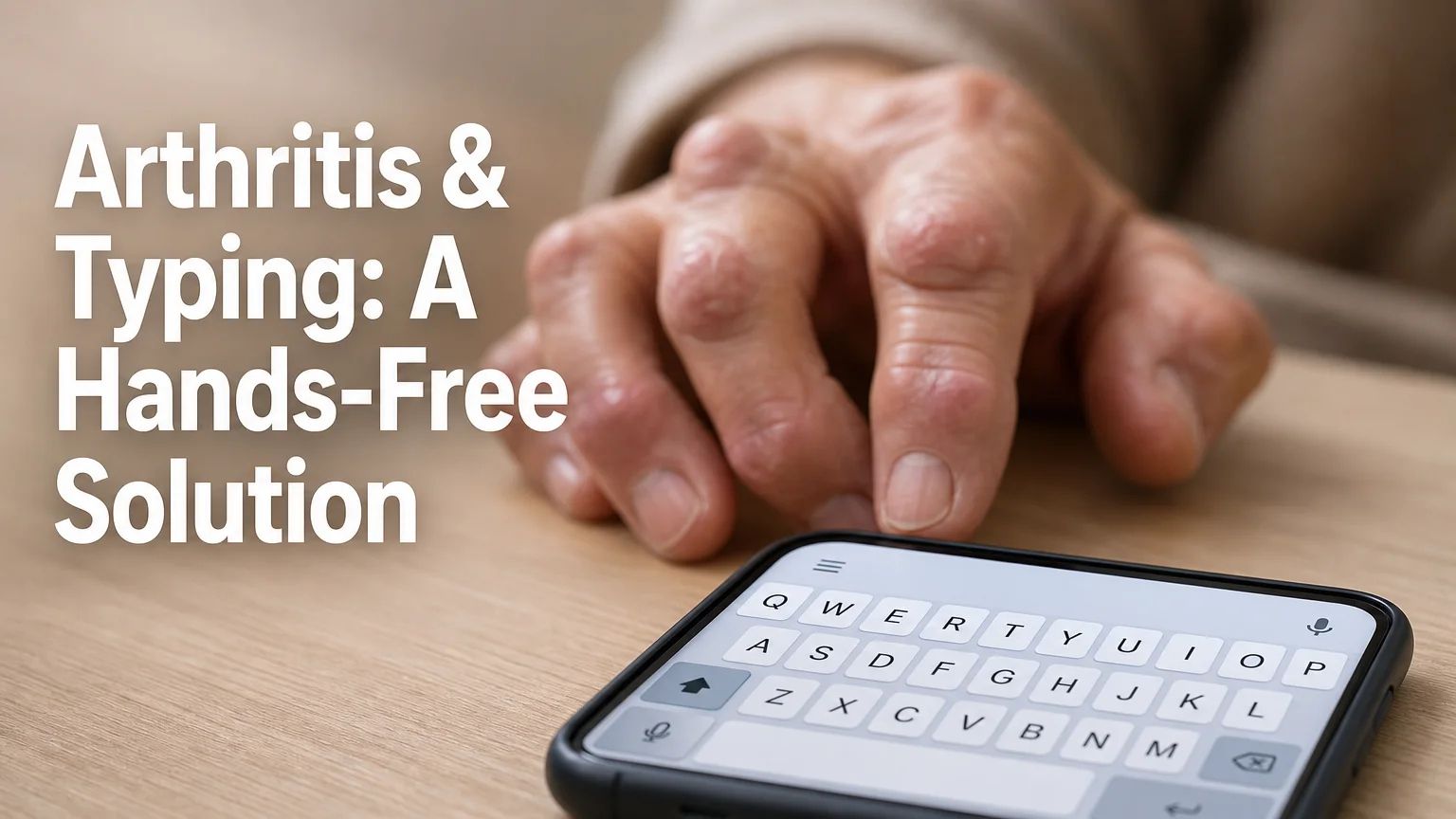
Typing With Arthritis: How to Work Pain-Free
Typing With Arthritis: How to Work Without the Pain
Yes, you can keep typing with arthritis, but for most people the honest answer is that you shouldn't have to fight through it every day. Ergonomic keyboards and forced breaks help at the margins. Voice dictation removes the mechanical stress entirely, which is why it's become the go-to workaround for people who refuse to slow down at work.
Roughly 1 in 4 US adults lives with some form of arthritis, and keyboard-heavy jobs are among the settings where symptoms show up first.
What Causes Pain When Typing With Arthritis?
Typing with arthritis hurts because repetitive keystrokes load already-inflamed finger and wrist joints thousands of times a day, and that mechanical stress compounds existing cartilage damage or synovial inflammation. Osteoarthritis wears down the cushioning between joints, so every keypress transmits more force directly into bone. Rheumatoid arthritis adds active inflammation on top of that, meaning the same motion also aggravates swollen tissue.
Two things make typing specifically worse than other everyday hand movements:
- Volume. A full-time desk job can mean 5,000–10,000 keystrokes a day, far more repetition than most manual tasks.
- Wrist extension. Flat keyboards force the wrist into an upward bend that adds pressure to joints already under strain.
Small joints in the fingers and thumbs bear the brunt of it, which is also why typing with arthritis hands on a phone screen often hurts worse than typing on a full keyboard. If your diagnosis is rheumatoid arthritis specifically, the mechanics differ enough from general wear-and-tear arthritis that our dedicated guide for RA sufferers is worth reading separately.
Key Takeaways
- Typing with arthritis loads inflamed finger and wrist joints thousands of times a day — the repetition, not any single keystroke, drives the damage.
- Ergonomic keyboards, wrist rests, and scheduled breaks reduce strain but don't remove the underlying mechanical stress.
- Voice dictation eliminates keystrokes entirely, and speaking is roughly 3x faster than typing for most adults (about 150 words per minute spoken versus roughly 40 typed).
- BossAI's Boss Mode reads your screen and drafts a full reply by voice command alone — no typing, no copy-pasting, even mid-flare.
- Rheumatoid arthritis and carpal tunnel syndrome produce overlapping symptoms; if your pain is wrist-specific rather than joint-specific, it's worth ruling out separately.
What Actually Helps When You Still Need to Type?
Not every workday allows you to stop typing altogether, so ergonomic adjustments are worth making even if they're not a full fix. These changes lower the strain per keystroke rather than removing keystrokes.
- Split or curved keyboards keep wrists in a neutral position instead of forcing them flat and extended.
- A soft-touch or low-force keyboard needs less downward pressure per key, which matters most for finger joints.
- Wrist rests and a slightly reclined chair angle reduce the load transmitted up through the forearm.
- The 20-8-2 rule — 20 minutes typing, 8 minutes standing, 2 minutes moving — gives inflamed joints regular recovery windows.
- Dictation for arthritis pain — swap voice-to-text in for anything longer than a sentence and total keystrokes drop dramatically without changing your workflow.
None of these eliminate the mechanical cause. They just spread the same total strain over more time, which is useful on good days and insufficient on flare-up days. Whether it's arthritis or a specific joint injury, voice dictation solves the root cause the same way: it removes repetitive finger strain instead of just managing it.
How Does Voice Dictation Help With Arthritis?
Voice dictation for arthritis works by removing keystrokes from the equation rather than making them gentler — you speak, the software transcribes and cleans up the text, and your joints never move. For someone managing a flare-up, that's the difference between finishing an email in two minutes and not finishing it at all.
The speed difference alone makes a case for switching. Most adults speak around 150 words per minute in normal conversation, versus roughly 35–40 words per minute typing. That gap compounds across a full workday of emails, chats, and documents.
Reality check: Dictation apps built with AI cleanup (filler-word removal, punctuation, grammar) close the old complaint that voice typing "sounds like a transcript." What you get instead reads like something you wrote carefully — because effectively, you did.
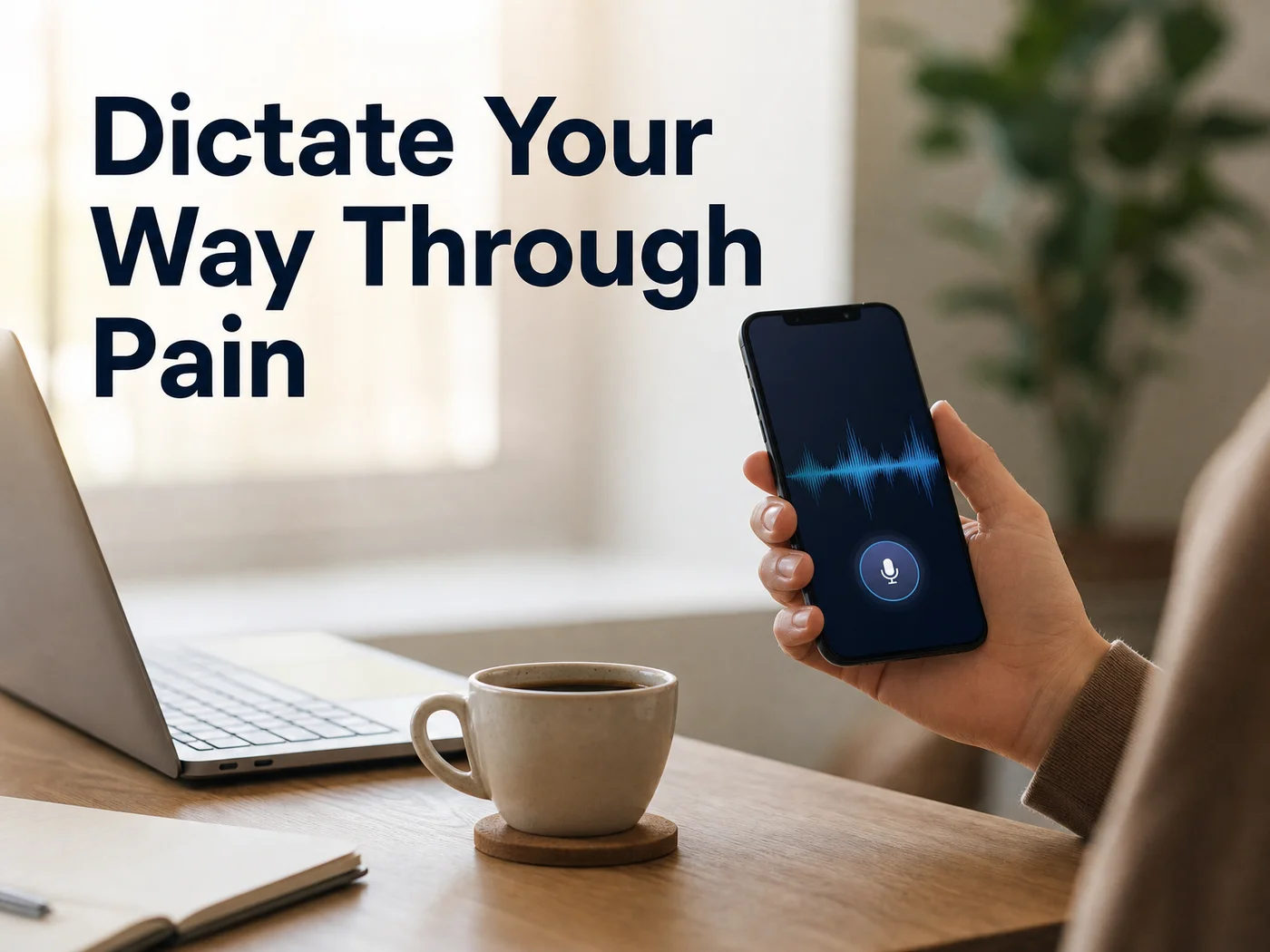 Dictation swaps keystrokes for speech — no grip, no repetitive strain, same output.
Speech to text for arthritis works best when the software does more than transcribe. Filler-word cleanup and automatic formatting matter, because a raw transcript full of "um" and run-on sentences just creates more editing — which usually means more typing to fix it.
If you have wrist pain specifically rather than joint-wide pain, it's worth checking whether the cause is arthritis at all; carpal tunnel is often mistaken for arthritis, and the fixes differ. Repetitive typing actually worsens arthritis over time, the same mechanism that causes carpal tunnel syndrome in people without any arthritis diagnosis at all.
How BossAI Solves the Arthritis + Typing Problem
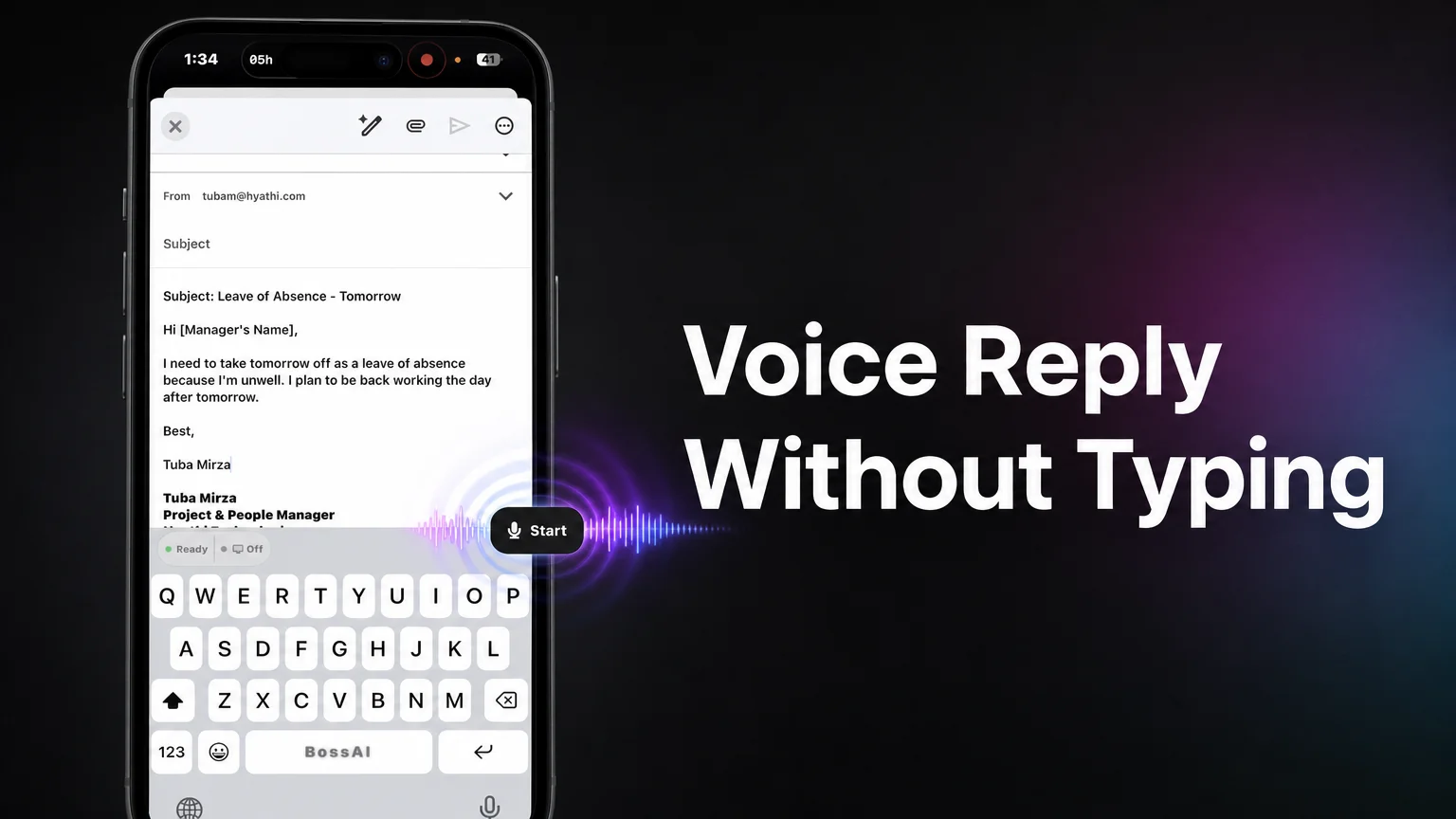 Boss Mode reads the email on screen and drafts a full reply from a single voice command.
Most dictation tools stop at transcription: you speak, they type. BossAI's Boss Mode goes further — say "Boss, reply to this email professionally" and it reads what's actually on your screen, understands the context, and writes a complete response without you typing a single character or copying a single word.
That matters most during a flare-up, when even holding a phone to type one-handed is painful. A user managing joint swelling can trigger Boss Mode, speak the gist of a reply, and let BossAI handle the wording, tone, and formatting — replying to an email or Slack message entirely hands-free, mid-flare, without reaching for a keyboard at all. The dictation itself also cleans up filler words and grammar in roughly 300 milliseconds after you stop speaking, so there's no manual editing pass afterward either.
- No copy-pasting. Boss Mode sees the email or chat directly — you never explain what's on screen.
- Works everywhere you type. BossAI replaces the keyboard on iOS and Android, and runs in the background on macOS and Windows.
- One-tap tone control. Rewrite a dictated reply as Professional, Casual, or four other tones without retyping anything.
Is Voice to Text Better Than Typing With Arthritis?
For arthritis specifically, voice to text is better than typing on every dimension that matters — speed, hand strain, and consistency during flare-ups — while typing retains an edge only in silent environments where speaking aloud isn't practical.
| Factor | Typing | Voice Dictation |
|---|---|---|
| Average speed | ~35-40 words/minute | ~150 words/minute spoken |
| Joint/hand movement required | Thousands of keystrokes | Zero |
| Usable mid-flare | Often painful or impossible | Fully usable |
| Editing needed | Manual proofreading | AI cleanup handles grammar, filler words |
| Works in quiet/shared spaces | Yes | Requires speaking aloud |
The one real tradeoff is environment. Open offices and quiet rooms make dictation awkward, which is the main reason ergonomic typing fixes still matter as a backup — not because they solve the underlying joint problem.
Get Started with BossAI
If flare-ups keep interrupting your workday, the fastest fix isn't a better keyboard — it's not using one. BossAI turns your voice into polished, ready-to-send text and can read your screen to draft replies for you, hands completely free.
Not ready to try it yet? Get Our AI Productivity Guide — free tips on working faster with AI.
FAQ
Can typing make arthritis worse?
Yes. Repetitive keystrokes add mechanical stress to joints already dealing with cartilage wear or inflammation, and sustained typing sessions can trigger or extend flare-ups. The volume of daily keystrokes in a desk job is usually the bigger factor than any single typing session.
What are the early signs of arthritis in the hands?
Early signs include morning stiffness that eases within an hour, joint swelling around the knuckles, a dull ache after typing or gripping, and reduced grip strength. Catching these early makes ergonomic and voice-based adjustments far more effective before damage progresses.
Is BossAI good for arthritis or hand injuries?
Yes. BossAI is built for zero-keyboard use — you dictate everything, and it handles transcription, filler-word removal, and tone correction automatically. People managing arthritis, carpal tunnel, or other repetitive strain conditions use it to write emails and messages entirely hands-free.
Is BossAI free to use?
Yes. BossAI has a free tier with no weekly word cap, so you can dictate as much as you need day to day. The paid plan adds unlimited Boss Mode screen reads, priority processing, and extended Clips storage — no credit card required to start.